Showing posts with label EU. Show all posts
Showing posts with label EU. Show all posts
September 11, 2013

September 5, 2013
Possible mass murder of strays - once again
Once again a tragedy of a human death brings a wave of hate towards the stray dogs in Romania. Below is an open letter written by Anu Raatikainen that is extremely well written and to-the-point. Please send your letters to at least the following email addresses:
procetatean@presidency.ro ; relatiicupublicul@aspa.ro ; relatiipublice@pmb.ro ; redactie@hotnews.ro ; martorocular@realitatea.net ; contact@evenimentul.ro ; reporter@corect.com ; redactia@romanialibera.ro ; dumitru.parvu@politiaromana.ro ; mimpiarr@gmail.com ; stirileprotv@protv.ro ; florentin.robescu@politiaromana.ro ; sesizare@mpublic.ro ; presedinte@mturism.ro ; info@mdrap.ro ; amr@amr.ro ; aor@aor.ro ; drp@gov.ro ; info@mdrap.ro ; petitii@mai.gov.ro ; relatiipublice@just.ro ; info@brasovultau.ro ; redactia@brasovultau.ro ,
romaniatravel@btconnect.com, info@RomaniaTourism.com, Rumaenien@aon.at ; office@romania.it; China@RomaniaTourism.co, ,info.rumunia@wp.pl, info@GuideRoumanie.com; info@romaniatravel.ru ; Muenchen@Rumaenien-Tourismus.de, ; oficina@RumaniaTour.com
Also visit the following facebook page: https://www.facebook.com/pages/Media-Bank-of-Romanian-stray-dog-abuse/160034624197722
UPDATE 6th September 2013:

The horror in Romania continues as every single dog on the streets of Romania is in danger of brutal torture and death. The first ones to die are the trusting, loving dogs who don't fear humans...after that, all the rest.
The dog in the picture was tortured by a brutal person who hit him with an axe and carved out his eye.
Not only the animals are in danger now, but also all the animal lovers and helpers in Romania are targeted by this insane hate that has taken over the country. The pain and sorrow of all animal activists is beyond words.

I urge you to visit the following link: Romania a country cries out for revenge after the tragic death of a four-year-old boy who had been attacked by dogs


procetatean@presidency.ro ; relatiicupublicul@aspa.ro ; relatiipublice@pmb.ro ; redactie@hotnews.ro ; martorocular@realitatea.net ; contact@evenimentul.ro ; reporter@corect.com ; redactia@romanialibera.ro ; dumitru.parvu@politiaromana.ro ; mimpiarr@gmail.com ; stirileprotv@protv.ro ; florentin.robescu@politiaromana.ro ; sesizare@mpublic.ro ; presedinte@mturism.ro ; info@mdrap.ro ; amr@amr.ro ; aor@aor.ro ; drp@gov.ro ; info@mdrap.ro ; petitii@mai.gov.ro ; relatiipublice@just.ro ; info@brasovultau.ro ; redactia@brasovultau.ro ,
romaniatravel@btconnect.com, info@RomaniaTourism.com, Rumaenien@aon.at ; office@romania.it; China@RomaniaTourism.co, ,info.rumunia@wp.pl, info@GuideRoumanie.com; info@romaniatravel.ru ; Muenchen@Rumaenien-Tourismus.de, ; oficina@RumaniaTour.com
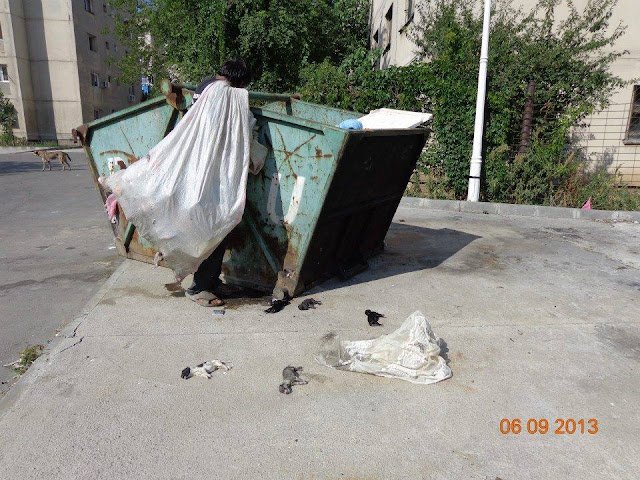
On September 2, 2013, very tragically a 4-year old child was killed by a dog when he unattended entered a private property occupied by guard dogs. As a result of this tragic event most of the media is fanning hatred toward dogs and the president of Romania is the leader of the angry mob.
The president wishes to pass a law in super speed and in the heat of the furious moment that would allow to kill all the dogs without an owner. According to him this would solve all the problems in regard to stray animals and Romania would be happy and safe country ever after – or would it?
Looking at the recent history of Romania dogs have been mass murdered for the last 20 years. Despite the fact that local and international animal welfare organizations and thousands of private EU citizens have frequently petitioned the highest officials of Romania to adopt a neuter and release practice, which is recommended by the WHO and the only effective way to manage stray dog population.
The sad truth is that this tragic event didn’t even have to happen, if the Romanian government and local authorities had adopted the neuter & release program some years ago. The number of strays would be sufficiently lower already.
Similar accidents like this occur also in other countries from time to time, however people always understand that these are individual cases and there is no need for mass hysteria nor hatred speeches against dogs. Now the president of Romania bluntly fails to see this event as an individual case, which it is, and the mass media obediently repeats the hate mantra. The killings of dogs never stopped in Romania, as the officials are nearly never taking animal welfare issues seriously, but now the brutal killings have speeded up with the blessing of the president. All this makes one wonder, what kind of effect these brutal killings and abuses have on children, those who everyone apparently wishes to protect with these actions. Now millions of children are daily exposed on brutal acts of violence which will cause them trauma.
One cannot help wondering if this blind rage and brutal massacre against all dogs is even meant to solve anything or is it just a feeble justification for sadistic acts for people who would be much better off in psychiatric therapy?
Sadly first the friendly sociable dogs are killed, many of them in no doubt some child’s best and maybe the only friend. Also sadly the media nor the president is not interested in news whenever a dog saves a baby or a child. No interviews or TV discussion for the hero stray dog saving a new born baby in snow in sub-temperatures.
Last but not least, let’s ask ourselves, is this planned new law really representing Romania to the world as a civilized, responsible country worth respect, investment and maybe a visit and is it really doing the job in developing Romania to a better safer place to all?
Also visit the following facebook page: https://www.facebook.com/pages/Media-Bank-of-Romanian-stray-dog-abuse/160034624197722
UPDATE 6th September 2013:

The horror in Romania continues as every single dog on the streets of Romania is in danger of brutal torture and death. The first ones to die are the trusting, loving dogs who don't fear humans...after that, all the rest.
The dog in the picture was tortured by a brutal person who hit him with an axe and carved out his eye.
Not only the animals are in danger now, but also all the animal lovers and helpers in Romania are targeted by this insane hate that has taken over the country. The pain and sorrow of all animal activists is beyond words.
"People say when you are healthy you feel none of your organs in your body, and this is a good sign. Since our president talked on the news and asked for the mass killing of the dogs my heart become a big and heavy rock that I feel in my chest all the time, trembling. I think all animal lovers in Romania feel the same. We look at all the stray dogs we see on the streets and wonder what we'll do when we know that we don't have any more place to take them, and leaving them on the streets will mean leaving them to a sure death? Not only will the dogs be tortured with this new law, all animal lovers from romania that fight so hard for them so many times before will be tortured with the dogs.
For all that know what the love for animals is, you know what this will do to us....please fight for us and ask EU to step in, to help not only with words, but with money...ask them to invest in big shelters, in big neutering programs. Words will not help now, but a concrete plan offered by EU to romania will help." - Asociatia Ador

I urge you to visit the following link: Romania a country cries out for revenge after the tragic death of a four-year-old boy who had been attacked by dogs


February 21, 2012
Independently funded shelters - UPDATED 2 march 2012
In a country such as Romania, where there’s a desperate need for animal welfare movements, independent, non-government associations and organizations, as well as individual people are a small, yet driving force for the improvement of the well being of strays. It also brings, slowly yet (in the end) inevitably, a change in overall attitudes towards the canine population. Process is always slow in countries like this, but it is there.
For instance, one town in Romania – Oradea – seems to have gotten its act together long enough to actually do something successful about the stray dog population. In 2003, there were an estimated 7000 stray dogs in Oradea. In 2010 there were less than 700, all as a result of a well-organized “catch, sterilize and release” program conducted jointly by the city and a local NGO (non-government organization). http://www.sosdogs.ro/sosdogs.php?act=viewdoc&docid=1&la=3
Now there is a county we all can refer to as an example, a pioneer, an existing proof for the skeptics that catch/neuter/return is a functioning system and solution to the stray problem.
Even when the corrupt people running the show manage to downplay the results, the pressure put by, most importantly, the locals, as well as global condemnation and EU (which will happen eventually – Eurogroup for Animals, for instance, has made progress in getting the European Council to include companion animals as part of the next Animal Welfare Action Plan). Again, the process is slow, but it is happening.
Shelters run by independent people/organizations/associations
For some reason, I've always been a bit wary when it comes to big organizations. Mostly because a big chunk of the money donated actually goes into other parts of "the big wheel" of the organization - without the donator really having any knowledge where. However, I do understand that in order to get visibility, campaigns etc, money is needed. But misuse of funds donated, corruption and lack of transparency unfortunately darkens trust in organizations where "big" money is involved. With small associations or independent people, it is easier to build trust, to talk directly to the people involved and have your money go where it's supposed to go. That's my personal experience, at least.
But, as always when dealing with people, caution is advised.
The way I see it, bigger associations/organizations, in addition to personal donations, should focus on getting companies and businesses (+ government funding etc) to sponsor them and what they do, as well as apply for grants from different grant foundations ( http://foundationcenter.org/getstarted/nonprofits/ ). This way they will gain more visibility and awareness, as well as make an even greater impact with their cause.
With smaller associations the chances for approved sponsorships (by companies etc) and grants are much more difficult. They rely almost entirely on donations from independent people to do what they do.
Trustworthy Associations
The associations and shelters this blog is going to promote are all "backed up" by reliable Finnish registered associations, one of them being Pelastetaan Koirat ry - dedicated to the welfare of strays in Estonia, as well as changing people's attitudes towards animals, both in Finland and Estonia, and dog adoptions. Pelastetaan Koirat ry's ideology has always been to help where help is most needed, and has recently extended its help to Romania.
A need-to-read Bulletin from PK (Pelastetaan Koirat ry) mostly to Finnish citizens (but it applies to all:
Rescue Associations point out: There are always risks associated with private imports of rescued dogs (meaning dogs imported to Finland privately, not through any associations).
More and more Finns want to get a rescue dog from a shelter they've found via Facebook or some other social media. The dog that melted your heart might not be from a shelter supported by the Finnish Associations. In this case, the proper knowledge on rules and regulations, i.e necessary procedures, vaccinations, import regulations etc needed might be unfamiliar to the person/shelter you're getting the dog from. Often the people sending the dog are poorly informed on admission requirements.
The risk is higher when there is a lack of close co-operation between the people involved. You might end up scammed, or risk bringing dangerous diseases to Finland. Regulations are there for a good reason.
Kodittomien koirien ystävät ry and Pelastetaan Koirat ry are concerned about the growing trend to adopt a homeless dog from abroad without the expert help of the associations. "Unfortunately, the phenomenon is more about good will and good intentions than know-how," says Salla Honkapää from Pelastetaan Koirat ry.
"The Adoption program is the outcome of in-depth work. That's why we visit the locations and the dogs many times, negotiating and agreeing on all the important points on paper," said Kodittomien Koirien Ystävät ry's spokeswoman Marianna Lammi. "Only then we can begin to work."
"The health program is being developed and updated constantly to ensure the continuation of the dog rescue operation, so that it does not compromise the disease situation in Finland. These important pieces of safety structure are missing when adopting outside the organizations", Salla Honkapää continues.
This may be forgotten, as the foreign animal welfare associations and dog kennels inform actively about their activity on the Internet. Facebook equalizes everyone to look like animal welfare experts.
When recorded into the Traces-system, the dog has been imported legally
In reality, private importation differs quite a lot from importation via registered Evira Associations. For example, each dog is reported to the Traces-system, which requires an official veterinary inspection.
Associations follow Ministry of Agriculture and Forestry's - and thereby the European Union's - import regulations concerning dog tag markings, rabies vaccinations and echinococcus treatment. Even more importantly, the associations know what other measures are required, and how extensive they should be.
"We are being asked almost weekly about the requirements for the importation of dogs from Romania to Finland. Formalities are taken seriously. However, they are still insufficient for ensuring the dogs health. Why this is and how to ensure it is for many foreign entities not clear. The health program in Romania should include rabies-, leptospirosis-, and 'quadruple'-vaccines, as well as a number of parasite tests. Not everyone has the necessary resources needed to do this," says Marianna Lammi.
Pity is not a reason
While co-operating, the Finnish association and the foreign party will learn about each other's "dog culture". The dog may be healthy by romanian standards, even though it might suffer from pain, and have unexplained skin problems. In Finland, many new facts about the dogs' health might be discovered, which at worst may be harmful to others as well as the dog itself.
Adoption also doesn't fit all dogs, but this may be forgotten when wanting to rescue a dog urgently to the security and warmth of a home.
"The association holds responsibility even after the transfer of ownership of the dog. The follow-up and support for the dogs adoptive family is an integral part of the adoption process. For a privately imported dog, the person is all alone," says Sally Honkapää.
"We are obviously pleased that Finns are open to adopt a homeless dog from abroad. Pity is still not reason enough to do it. We believe that a suitable dog fitting ones own life situation can also be found through responsible rescue organization sites. If not, we strongly suggest that the adopter personally retrieves the dog from its country of origin in order to guarantee the safety first-hand. This requires expertise," underlines Kodittomien Koirien Ystävät ry.
Both of these associations point out that the general public doesn't know how to distinguish between private rescue operations and rescue operations carried out by the associations, making it also about the reputation of the rescue dog programs. "If even one sick dog arrives to Finland from Romania, all rescue dogs will be stigmatized. No one will bother to ask who brought the dog to Finland", Honkapää says.
How to identify a reliable operator?
• The association is registered at Evira as a commercial importer of dogs.
• The Association registers all dogs into the Traces-system, and complies with the Ministry of Agriculture and Forestry's admission requirements.
• The Association presents publicly a program in which the health situation of the dogs is examined as accurately as possible.
• The association describes the dog looking for a home realistically, informing that the personality of the dog may differ in the new home. A responsible association does not promise anything that can't be promised, like the dogs being perfectly healthy.
• The association does not force or hurry you to make a decision on dog adoption.
For instance, one town in Romania – Oradea – seems to have gotten its act together long enough to actually do something successful about the stray dog population. In 2003, there were an estimated 7000 stray dogs in Oradea. In 2010 there were less than 700, all as a result of a well-organized “catch, sterilize and release” program conducted jointly by the city and a local NGO (non-government organization). http://www.sosdogs.ro/sosdogs.php?act=viewdoc&docid=1&la=3
Now there is a county we all can refer to as an example, a pioneer, an existing proof for the skeptics that catch/neuter/return is a functioning system and solution to the stray problem.
Even when the corrupt people running the show manage to downplay the results, the pressure put by, most importantly, the locals, as well as global condemnation and EU (which will happen eventually – Eurogroup for Animals, for instance, has made progress in getting the European Council to include companion animals as part of the next Animal Welfare Action Plan). Again, the process is slow, but it is happening.
Shelters run by independent people/organizations/associations
For some reason, I've always been a bit wary when it comes to big organizations. Mostly because a big chunk of the money donated actually goes into other parts of "the big wheel" of the organization - without the donator really having any knowledge where. However, I do understand that in order to get visibility, campaigns etc, money is needed. But misuse of funds donated, corruption and lack of transparency unfortunately darkens trust in organizations where "big" money is involved. With small associations or independent people, it is easier to build trust, to talk directly to the people involved and have your money go where it's supposed to go. That's my personal experience, at least.
But, as always when dealing with people, caution is advised.
The way I see it, bigger associations/organizations, in addition to personal donations, should focus on getting companies and businesses (+ government funding etc) to sponsor them and what they do, as well as apply for grants from different grant foundations ( http://foundationcenter.org/getstarted/nonprofits/ ). This way they will gain more visibility and awareness, as well as make an even greater impact with their cause.
With smaller associations the chances for approved sponsorships (by companies etc) and grants are much more difficult. They rely almost entirely on donations from independent people to do what they do.
Trustworthy Associations
The associations and shelters this blog is going to promote are all "backed up" by reliable Finnish registered associations, one of them being Pelastetaan Koirat ry - dedicated to the welfare of strays in Estonia, as well as changing people's attitudes towards animals, both in Finland and Estonia, and dog adoptions. Pelastetaan Koirat ry's ideology has always been to help where help is most needed, and has recently extended its help to Romania.
A need-to-read Bulletin from PK (Pelastetaan Koirat ry) mostly to Finnish citizens (but it applies to all:
Rescue Associations point out: There are always risks associated with private imports of rescued dogs (meaning dogs imported to Finland privately, not through any associations).
More and more Finns want to get a rescue dog from a shelter they've found via Facebook or some other social media. The dog that melted your heart might not be from a shelter supported by the Finnish Associations. In this case, the proper knowledge on rules and regulations, i.e necessary procedures, vaccinations, import regulations etc needed might be unfamiliar to the person/shelter you're getting the dog from. Often the people sending the dog are poorly informed on admission requirements.
The risk is higher when there is a lack of close co-operation between the people involved. You might end up scammed, or risk bringing dangerous diseases to Finland. Regulations are there for a good reason.
Kodittomien koirien ystävät ry and Pelastetaan Koirat ry are concerned about the growing trend to adopt a homeless dog from abroad without the expert help of the associations. "Unfortunately, the phenomenon is more about good will and good intentions than know-how," says Salla Honkapää from Pelastetaan Koirat ry.
"The Adoption program is the outcome of in-depth work. That's why we visit the locations and the dogs many times, negotiating and agreeing on all the important points on paper," said Kodittomien Koirien Ystävät ry's spokeswoman Marianna Lammi. "Only then we can begin to work."
"The health program is being developed and updated constantly to ensure the continuation of the dog rescue operation, so that it does not compromise the disease situation in Finland. These important pieces of safety structure are missing when adopting outside the organizations", Salla Honkapää continues.
This may be forgotten, as the foreign animal welfare associations and dog kennels inform actively about their activity on the Internet. Facebook equalizes everyone to look like animal welfare experts.
When recorded into the Traces-system, the dog has been imported legally
In reality, private importation differs quite a lot from importation via registered Evira Associations. For example, each dog is reported to the Traces-system, which requires an official veterinary inspection.
Associations follow Ministry of Agriculture and Forestry's - and thereby the European Union's - import regulations concerning dog tag markings, rabies vaccinations and echinococcus treatment. Even more importantly, the associations know what other measures are required, and how extensive they should be.
"We are being asked almost weekly about the requirements for the importation of dogs from Romania to Finland. Formalities are taken seriously. However, they are still insufficient for ensuring the dogs health. Why this is and how to ensure it is for many foreign entities not clear. The health program in Romania should include rabies-, leptospirosis-, and 'quadruple'-vaccines, as well as a number of parasite tests. Not everyone has the necessary resources needed to do this," says Marianna Lammi.
Pity is not a reason
While co-operating, the Finnish association and the foreign party will learn about each other's "dog culture". The dog may be healthy by romanian standards, even though it might suffer from pain, and have unexplained skin problems. In Finland, many new facts about the dogs' health might be discovered, which at worst may be harmful to others as well as the dog itself.
Adoption also doesn't fit all dogs, but this may be forgotten when wanting to rescue a dog urgently to the security and warmth of a home.
"The association holds responsibility even after the transfer of ownership of the dog. The follow-up and support for the dogs adoptive family is an integral part of the adoption process. For a privately imported dog, the person is all alone," says Sally Honkapää.
"We are obviously pleased that Finns are open to adopt a homeless dog from abroad. Pity is still not reason enough to do it. We believe that a suitable dog fitting ones own life situation can also be found through responsible rescue organization sites. If not, we strongly suggest that the adopter personally retrieves the dog from its country of origin in order to guarantee the safety first-hand. This requires expertise," underlines Kodittomien Koirien Ystävät ry.
Both of these associations point out that the general public doesn't know how to distinguish between private rescue operations and rescue operations carried out by the associations, making it also about the reputation of the rescue dog programs. "If even one sick dog arrives to Finland from Romania, all rescue dogs will be stigmatized. No one will bother to ask who brought the dog to Finland", Honkapää says.
How to identify a reliable operator?
• The association is registered at Evira as a commercial importer of dogs.
• The Association registers all dogs into the Traces-system, and complies with the Ministry of Agriculture and Forestry's admission requirements.
• The Association presents publicly a program in which the health situation of the dogs is examined as accurately as possible.
• The association describes the dog looking for a home realistically, informing that the personality of the dog may differ in the new home. A responsible association does not promise anything that can't be promised, like the dogs being perfectly healthy.
• The association does not force or hurry you to make a decision on dog adoption.
February 15, 2012
To understand the situation in Romania - History and Mentality (Remade April 2012)
In order to understand how the stray dog situation came to be what it is today, we need to take a look back.
All the information below is from the Case Study: Romania by Liviu Harbuz, President of College of Romanian Veterinarians
Historic background:
- From 1970 to 1989 in Romania demolition work let stray dogs roam freely in the streets and nobody took care of the control of reproduction.
- Rural population built their own farms. Around 80% of farmers owned a dog = a total of 3.2 million dogs and cats in rural areas.
- People blame former Romanian dictator Nicolae Ceausescu for the homeless dogs. In 1984, he razed the historic town center to create the House of the Republic, now the Palace of Parliament, a communist monstrosity that is the world's largest civilian administrative building. As a result, an estimated 40,000 families were relocated to modern apartment buildings in which pets were forbidden. So they abandoned them to the streets.
- During this time, 60% of population lived in rural areas.
- Communist era – people were starving
- People were poor but cared for animals
- There was a lack of education programs and parasite prevention, as well as a lack of identification and registration of pets.
- The only prevention method was anti-rabies vaccination. The vaccine caused side effects (encephalitis) to 15% of dogs; population became unwilling to vaccinate their dogs and cats.
- In Bucharest there were specialized salubrity services belonging to public institutions which dealt with catching and killing stray dogs; they were used for:
-animal skin processing companies
Veterinary Background:
- Forest rabies spread by foxes expanded because of the lack of oral vaccination of these animals
- Rabid foxes were hunted, skinned, processed and offered as food to cats and dogs. Since parasite prevention was accidental, parasites lived the entire biological cycle (sheep – dog – man) on the farms.
- Many external and internal parasites were found only when a man became ill and was sent to a hospital, where he would be diagnosed with zoonoses.
- In Romania there were only 30 veterinarians qualified to treat pets (dogs and cats).
- In the countryside, the dogs were kept in chain, hierarchically speaking being behind other farm animals.
- Dogs were fed with products and by-products derived from other species, so the epidemic situation was complex and perpetual
Social Background:
- The presence of stray dogs in parks, on playgrounds, in tourist resorts, on beaches, has caused a rejection response against pets from both authorities and restaurant and hotel owners.
- Under the circumstances there are many cases where people have understood to take justice into their own hands, because we are lacking well structured programs of the relevant authorities.
- It is depressing to see the count of dead dog scattered on highways, or even of people killed in traffic accidents, occurred because they attempted to avoid a dog or a horse loose on the road.
- Moreover, there are quite a few incidents when game is attacked by starving dogs, which are reverting to the condition of a wild animal.
Animal protection:
- Paradoxically, an animal protection program existed during the communist regime. There were non-governmental organizations which acted sporadically.
- Civil society was extremely active during the time of monarchy in Romania, between the two World Wars. The first organization for animal protection and the first animal protection law were founded in 1935. In 1938 there was a large number of professional organizations being set up, especially dealing with liberal professions, which developed significantly.
- The National Associations of Veterinarians was founded in this time. Veterinary medicine developed due to two factors: horses (which were used in the army, for sport, hunting and work) and dogs as pets and hunting.
- Once communism was installed, agriculture was collectivized and mechanized, and many horses used for farm work were killed. Horses used for recreation and dogs kept as pets were associated with capitalist society.
Animal protection legislation:
- The first 5 years after 1989 revolution, 10 NGO's dealing with animal protection appeared.
- In 1999 there were 36 animal protection organizations and more than 50 practices. Currently, there are over 130 organizations, over 230 practices and hospitals and over 60 private and public shelters for stray dogs.
- In 2001, the Government issued regulation 155, regarding the program of managing stray dogs, a regulation which was approved by Law 227/2002.
- In 2004, the Parliament passed Law 60, regarding the ratification of European Convention for pet protection. Also, authorities passed Law 205, regarding animal protection, which was modified and completed by Law 9/2008.
For a detailed take on the solution strategies for the canine overpopulation in Romania, please read the following link by Liviu Harbuz, President of College of Romanian Veterinarians.
- Romania ratified the European arrangement for the protection of home animals which came into force on the 01.03.2005.
- Romania is a member of the EU since 1.1.2007. Cruelty towards animals is against the EU values that Romania has adopted when joining the Community.
"The Union and the Member States shall, since animals are sentient beings, pay full regard to the welfare requirements of animals, while respecting the legislative or administrative provisions and customs of the Member States relating in particular to religious rites, cultural traditions and regional heritage."
I hardly think abusing and killing stray dogs can in anyones book be seen as a romanian religious, cultural or regional tradition... Only education, information and a big change in common attitudes will change how people perceive these amazingly forgiving creatures.
Subscribe to:
Posts (Atom)